I finished "I Know why the caged bird sings"
by Maya Angelou and commentary by me!

Wouldn't they be surprised when one day I woke out of my black ugly dream, and my real hair, which was long and blond, would take the place of the kinky mass that Momma wouldn't let me straighten? My light-blue eyes were going to hypnotize them, after all the things they said about “my daddy must of been a Chinaman” (I thought they meant made out of china, like a cup) because my eyes were so small and squinty. Then they would understand why I had never picked up a Southern accent, or spoke the common slang, and why I had to be forced to eat pigs' tails and snouts. Because I was really white and because a cruel fairy stepmother, who was understandably jealous of my beauty, had turned me into a too-big Negro girl, with nappy black hair, broad feet and a space between her teeth that would hold a number-two pencil.
Having extended periods of hating my nappy hair is in my umwelt of experience as well. As a metalhead, I never got to participate in the hairstyles of the era.

As a fraternity brother, I never got to style my hair to fit in.

I tried to emulate Kilmonger from Black Panther, but that was largely a failure.

Crooked teeth too! (Though that is not due to race, it is due to genetics crossing paths with a low income household)
The tragedy of lameness seems so unfair to children that they are embarrassed in its presence. And they most recently off nature's mold, sense that they have only narrowly missed being another of her jokes. In relief at the narrow escape, they vent their emotions in impatience and criticism of the unlucky cripple. Momma related times without end, and without any show of emotion, how Uncle Willie had been dropped when he was three years old by a woman who was minding him. She seemed to hold no rancor against the babysitter, nor for her just God who allowed the accident. She felt it necessary to explain over and over again to those who knew the story by heart that he wasn't “born that way.” In our society, where two-legged, two-armed strong Black men were able at best to eke out only the necessities of life, Uncle Willie, with his starched shirts, shined shoes and shelves full of food, was the whipping boy and butt of jokes of the underemployed and underpaid. Fate not only disabled him but laid a double-tiered barrier in his path. He was also proud and sensitive. Therefore he couldn't pretend that he wasn't crippled, nor could he deceive himself that people were not repelled by his defect. Only once in all the years of trying not to watch him, I saw him pretend to himself and others that he wasn't lame. Coming home from school one day, I saw a dark car in our front yard. I rushed in to find a strange man and woman (Uncle Willie said later they were schoolteachers from Little Rock) drinking Dr Pepper in the cool of the Store. I sensed a wrongness around me, like an alarm clock that had gone off without being set. I knew it couldn't be the strangers. Not frequently, but often enough, travelers pulled off the main road to buy tobacco or soft drinks in the only Negro store in Stamps. When I looked at Uncle Willie, I knew what was pulling my mind's coattails. He was standing erect behind the counter, not leaning forward or resting on the small shelf that had been built for him. Erect. His eyes seemed to hold me with a mixture of threats and appeal. I dutifully greeted the strangers and roamed my eyes around for his walking stick. It was nowhere to be seen. He said, “Uh … this this … this … uh, my niece. She's … uh … just come from school.” Then to the couple—“ You know … how, uh, children are … th-th-these days … they play all d-d-day at school and c-c-can't wait to get home and pl-play some more.” The people smiled, very friendly. He added, “Go on out and pl-play, Sister.” The lady laughed in a soft Arkansas voice and said, “Well, you know, Mr. Johnson, they say, you're only a child once. Have you children of your own?” Uncle Willie looked at me with an impatience I hadn't seen in his face even when he took thirty minutes to loop the laces over his high-topped shoes. “I … I thought I told you to go … go outside and play.” Before I left I saw him lean back on the shelves of Garret Snuff, Prince Albert and Spark Plug chewing tobacco. “No, ma'am … no ch-children and no wife.” He tried a laugh. “I have an old m-m-mother and my brother's t-two children to l-look after.” I didn't mind his using us to make himself look good. In fact, I would have pretended to be his daughter if he wanted me to. Not only did I not feel any loyalty to my own father, I figured that if I had been Uncle Willie's child I would have received much better treatment.
We forget how often life's largest blessings and curses are separated only by a thin line of a random genetic mutation. How one life and the other is pre-ordained by some genetic base pairs deciding to be a C instead of a G.
During these years in Stamps, I met and fell in love with William Shakespeare. He was my first white love. Although I enjoyed and respected Kipling, Poe, Butler, Thackeray and Henley, I saved my young and loyal passion for Paul Lawrence Dunbar, Langston Hughes, James Weldon Johnson and W.E.B. Du Bois' “Litany at Atlanta.” But it was Shakespeare who said, “When in disgrace with fortune and men's eyes.” It was a state with which I felt myself most familiar. I pacified myself about his whiteness by saying that after all he had been dead so long it couldn't matter to anyone any more. Bailey and I decided to memorize a scene from The Merchant of Venice, but we realized that Momma would question us about the author and that we'd have to tell her that Shakespeare was white, and it wouldn't matter to her whether he was dead or not. So we chose “The Creation” by James Weldon Johnson instead.
A major reason I picked up this book is that I realized I had been mainly consuming white male authors. I strive (not always successfully) to be able to get my knowledge from anywhere.
Maya Angelou’s deep literary well makes her such a beautiful writer. Her words feel so alive!
What sets one Southern town apart from another, or from a Northern town or hamlet, or city high-rise? The answer must be the experience shared between the unknowing majority (it) and the knowing minority (you). All of childhood's unanswered questions must finally be passed back to the town and answered there. Heroes and bogey men, values and dislikes, are first encountered and labeled in that early environment. In later years they change faces, places and maybe races, tactics, intensities and goals, but beneath those penetrable masks they wear forever the stocking-capped faces of childhood.
Our primary experiences shape our actions even when we have done and seen so much that we can’t even remember the primary experiences in the first place. Echoes and sedimentary layers.
I’m a city boy for the rest of my life, I’m pretty sure.
Crossing the Black area of Stamps which in childhood's narrow measure seemed a whole world, we were obliged by custom to stop and speak to every person we met, and Bailey felt constrained to spend a few minutes playing with each friend. There was a joy in going to town with money in our pockets (Bailey's pockets were as good as my own) and time on our hands. But the pleasure fled when we reached the white part of town. After we left Mr. Willie Williams' Do Drop Inn, the last stop before whitefolksville, we had to cross the pond and adventure the railroad tracks. We were explorers walking without weapons into maneating animals' territory. In Stamps the segregation was so complete that most Black children didn't really absolutely know what whites looked like. Other than that they were different, to be dreaded, and in that dread was included the hostility of the powerless against the powerful, the poor against the rich, the worker against the worked for and the ragged against the well dressed. I remember never believing that whites were really real. Many women who worked in their kitchens traded at our Store, and when they carried their finished laundry back to town they often set the big baskets down on our front porch to pull a singular piece from the starched collection and show either how graceful was their ironing hand or how rich and opulent was the property of their employers. I looked at the items that weren't on display. I knew, for instance, that white men wore shorts, as Uncle Willie did, and that they had an opening for taking out their “things” and peeing, and that white women's breasts weren't built into their dresses, as some people said, because I saw their brassieres in the baskets. But I couldn't force myself to think of them as people. People were Mrs. LaGrone, Mrs. Hendricks, Momma, Reverend Sneed, Lillie B, and Louise and Rex. Whitefolks couldn't be people because their feet were too small, their skin too white and see-throughy, and they didn't walk on the balls of their feet the way people did—they walked on their heels like horses. People were those who lived on my side of town. I didn't like them all, or, in fact, any of them very much, but they were people. These others, the strange pale creatures that lived in their alien unlife, weren't considered folks. They were whitefolks.
One of the interesting effects of the integration of American communities and American schools was that it wasn't necessarily reparative of how people thought about each other, specifically if people thought that “people were people”. Maya Angelou puts this pretty clearly here. Another good book to read on this is Black Rednecks and White Liberals by Thomas Sowell.
“Thou shall not be dirty” and “Thou shall not be impudent” were the two commandments of Grandmother Henderson upon which hung our total salvation. Each night in the bitterest winter we were forced to wash faces, arms, necks, legs and feet before going to bed. She used to add, with a smirk that unprofane people can't control when venturing into profanity, “and wash as far as possible, then wash possible.” We would go to the well and wash in the ice-cold, clear water, grease our legs with the equally cold stiff Vaseline, then tiptoe into the house. We wiped the dust from our toes and settled down for schoolwork, cornbread, clabbered milk, prayers and bed, always in that order. Momma was famous for pulling the quilts off after we had fallen asleep to examine our feet. If they weren't clean enough for her, she took the switch (she kept one behind the bedroom door for emergencies) and woke up the offender with a few aptly placed burning reminders. The area around the well at night was dark and slick, and boys told about how snakes love water, so that anyone who had to draw water at night and then stand there alone and wash knew that moccasins and rattlers, puff adders and boa constrictors were winding their way to the well and would arrive just as the person washing got soap in her eyes. But Momma convinced us that not only was cleanliness next to Godliness, dirtiness was the inventor of misery.
I should really try to keep my apartment cleaner. A clean apartment does wonders for my mental health, and the inverse for a dirty or cluttered one.
TW: Sexual Assualt
Because of a need for stability, children easily become creatures of habit...He said, “Just stay right here, Ritie, I ain't gonna hurt you.” I wasn't afraid, a little apprehensive, maybe, but not afraid....He didn't hurt, but Momma had drilled into my head: “Keep your legs closed, and don't let nobody see your pocketbook.”...Ghost stories revealed how people who died wouldn't let go of whatever they were holding. I wondered if Mr. Freeman died holding me how I would ever get free. Would they have to break his arms to get me loose?...He held me so softly that I wished he wouldn't ever let me go. I felt at home. From the way he was holding me I knew he'd never let me go or let anything bad ever happen to me. This was probably my real father and we had found each other at last. But then he rolled over, leaving me in a wet place and stood up...He came back with a glass of water and told me in a sour voice, “Get up. You peed in the bed.” He poured water on the wet spot, and it did look like my mattress on many mornings. Having lived in Southern strictness, I knew when to keep quiet around adults, but I did want to ask him why he said I peed when I was sure he didn't believe that. If he thought I was naughty, would that mean that he would never hold me again?...“Ritie, you love Bailey?” He sat down on the bed and I came close, hoping. “Yes.” He was bending down, pulling on his socks, and his back was so large and friendly I wanted to rest my head on it. “If you ever tell anybody what we did, I'll have to kill Bailey.”...After he left the room I thought about telling Mother that I hadn't peed in the bed, but then if she asked me what happened I'd have to tell her about Mr. Freeman holding me, and that wouldn't do. It was the same old quandary. I had always lived it. There was an army of adults, whose motives and movements I just couldn't understand and who made no effort to understand mine. There was never any question of my disliking Mr. Freeman, I simply didn't understand him either.
I won't repost the full quote of Maya Angelou's rape by the hands of Mr. Freeman, but it's an extremely powerful and emotional description of the guilt that a child felt in such a horrific situation as well as the failure of the adults around her to protect her.
Maya Angelou truly is one of the blessed writers who allows us to see the world as it is.
In the hospital, Bailey told me that I had to tell who did that to me, or the man would hurt another little girl. When I explained that I couldn't tell because the man would kill him, Bailey said knowingly, “He can't kill me. I won't let him.” And of course I believed him. Bailey didn't lie to me. So I told him. Bailey cried at the side of my bed until I started to cry too. Almost fifteen years passed before I saw my brother cry again.
I read more than ever, and wished my soul that I had been born a boy. Horatio Alger was the greatest writer in the world. His heroes were always good, always won and were always boys. I could have developed the first two virtues, but becoming a boy was sure to be difficult, if not impossible. The Sunday funnies influenced me, and although I admired the strong heroes who always conquered in the end, I identified with Tiny Tim. In the toilet, where I used to take the papers, it was tortuous to look for and exclude the unnecessary pages so that I could learn how he would finally outwit his latest adversary. I wept with relief every Sunday as he eluded the evil men and bounded back from each seeming defeat as sweet and gentle as ever. The Katzenjammer kids were fun because they made the adults look stupid. But they were a little too smart-alecky for my taste. When spring came to St. Louis, I took out my first library card, and since Bailey and I seemed to be growing apart, I spent most of my Saturdays at the library (no interruptions) breathing in the world of penniless shoeshine boys who, with goodness and perseverance, became rich, rich men, and gave baskets of goodies to the poor on holidays. The little princesses who were mistaken for maids, and the long-lost children mistaken for waifs, became more real to me than our house, our mother, our school or Mr. Freeman.
The saying that people who have nothing to do become busybodies is not the only truth. Excitement is a drug, and people whose lives are filled with violence are always wondering where the next “fix” is coming from. The court was filled. Some people even stood behind the churchlike benches in the rear. Overhead fans moved with the detachment of old men. Grandmother Baxter's clients were there in gay and flippant array. The gamblers in pinstriped suits and their makeup-deep women whispered to me out of blood-red mouths that now I knew as much as they did. I was eight, and grown. Even the nurses in the hospital had told me that now I had nothing to fear. “The worst is over for you,” they had said. So I put the words in all the smirking mouths. I sat with my family (Bailey couldn't come) and they rested still on the seats like solid, cold gray tombstones. Thick and forevermore unmoving. Poor Mr. Freeman twisted in his chair to look empty threats over to me. He didn't know that he couldn't kill Bailey … and Bailey didn't lie … to me. “What was the defendant wearing?” That was Mr. Freeman's lawyer. “I don't know.” “You mean to say this man raped you and you don't know what he was wearing?” He snickered as if I had raped Mr. Freeman. “Do you know if you were raped?” A sound pushed in the air of the court (I was sure it was laughter). I was glad that Mother had let me wear the navy-blue winter coat with brass buttons. Although it was too short and the weather was typical St. Louis hot, the coat was a friend that I hugged to me in the strange and unfriendly place. “Was that the first time the accused touched you?” The question stopped me. Mr. Freeman had surely done something very wrong, but I was convinced that I had helped him to do it. I didn't want to lie, but the lawyer wouldn't let me think, so I used silence as a retreat. “Did the accused try to touch you before the time he or rather you say he raped you?” I couldn't say yes and tell them how he had loved me once for a few minutes and how he had held me close before he thought I had peed in my bed. My uncles would kill me and Grandmother Baxter would stop speaking, as she often did when she was angry. And all those people in the court would stone me as they had stoned the harlot in the Bible. And Mother, who thought I was such a good girl, would be so disappointed. But most important, there was Bailey. I had kept a big secret from him. “Marguerite, answer the question. Did the accused touch you before the occasion on which you claim he raped you?” Everyone in the court knew that the answer had to be No. Everyone except Mr. Freeman and me. I looked at his heavy face trying to look as if he would have liked me to say No. I said No. The lie lumped in my throat and I couldn't get air. How I despised the man for making me lie. Old, mean, nasty thing. Old, black, nasty thing. The tears didn't soothe my heart as they usually did. I screamed, “Ole, mean, dirty thing, you. Dirty old thing.” Our lawyer brought me off the stand and to my mother's arms. The fact that I had arrived at my desired destination by lies made it less appealing to me. Mr. Freeman was given one year and one day but he never got a chance to do his time. His lawyer (or someone) got him released that very afternoon. In the living room, where the shades were drawn for coolness, Bailey and I played Monopoly on the floor. I played a bad game because I was thinking how I would be able to tell Bailey how I had lied and, even worse for our relationship, kept a secret from him. Bailey answered the doorbell, because Grandmother was in the kitchen. A tall white policeman asked for Mrs. Baxter. Had they found out about the lie? Maybe the policeman was coming to put me in jail because I had sworn on the Bible that everything I said would be the truth, the whole truth, so help me, God. The man in our living room was taller than the sky and whiter than my image of God. He just didn't have the beard. “Mrs. Baxter, I thought you ought to know. Freeman's been found dead on the lot behind the slaughterhouse.” Softly, as if she were discussing a church program, she said, “Poor man.” She wiped her hands on the dishtowel and just as softly asked, “Do they know who did it?” The policeman said, “Seems like he was dropped there. Some say he was kicked to death.” Grandmother's color only rose a little. “Tom, thanks for telling me. Poor man. Well, maybe it's better this way. He was a mad dog. Would you like a glass of lemonade? Or some beer?”
There's a difference between:
- Justice
- The spectacle of justice
- What actually is fair to the people who have been harmed, both to the accuser, the accused, the victim, the perpetrator, and those around the person(s)
It takes a level head and long-term thinking to be able to understand which is which.
His obesity, while disgusting, was not enough to incur the intense hate that we felt for him. The fact that he never bothered to remember our names was insulting, but neither was that slight, alone, enough to make us despise him. But the crime that tipped the scale and made our hate not only just but imperative was his actions at the dinner table. He ate the biggest, brownest and best parts of the chicken at every Sunday meal.
It's like hoarding all four corners of the brownie pan. You just don't do it, man!
And once, we found out about a man who had been killed by whitefolks and thrown into the pond. Bailey said the man's things had been cut off and put in his pocket and he had been shot in the head, all because the whitefolks said he did “it” to a white woman. Because of the kinds of news we filched from those hushed conversations, I was convinced that whenever Reverend Thomas came and Momma sent us to the back room they were going to discuss whitefolks and “doing it.” Two subjects about which I was very dim.
Another fantastic use of Maya Angelou shooting straight with her writing. Even though the topic is horrific and disgusting, she ties it so well into the experiences that we all have in childhood of trying to extract secrets from the adults in our lives.
People in Stamps used to say that the whites in our town were so prejudiced that a Negro couldn't buy vanilla ice cream. Except on July Fourth. Other days he had to be satisfied with chocolate.
On the plus side, at least I still get to eat Ben and Jerry’s Phish Food!
“You be a good girl now. You hear? Don't you make people think I didn't raise you right. You hear?” She would have been more surprised than I had she taken me in her arms and wept at losing me. Her world was bordered on all sides with work, duty, religion and “her place.” I don't think she ever knew that a deep-brooding love hung over everything she touched. In later years I asked her if she loved me and she brushed me off with: “God is love. Just worry about whether you're being a good girl, then He will love you.”
My grandmother is about 20 years younger than Maya Angelou, but I get a lot of fellow-feeling reading this passage to the lessons that she taught me coming up. Specifically her relationship with religion, work, and family.
To describe my mother would be to write about a hurricane in its perfect power. Or the climbing, falling colors of a rainbow. We had been received by her mother and had waited on the edge of our seats in the overfurnished living room (Dad talked easily with our grandmother, as white-folks talk to Blacks, unembarrassed and unapologetic). We were both fearful of Mother's coming and impatient at her delay. It is remarkable how much truth there is in the two expressions: “struck dumb” and “love at first sight.” My mother's beauty literally assailed me. Her red lips (Momma said it was a sin to wear lipstick) split to show even white teeth and her fresh-butter color looked see-through clean. Her smile widened her mouth beyond her cheeks beyond her ears and seemingly through the walls to the street outside. I was struck dumb. I knew immediately why she had sent me away. She was too beautiful to have children. I had never seen a woman as pretty as she who was called “Mother.” Bailey on his part fell instantly and forever in love. I saw his eyes shining like hers; he had forgotten the loneliness and the nights when we had cried together because we were “unwanted children.” He had never left her warm side or shared the icy wind of solitude with me. She was his Mother Dear and I resigned myself to his condition. They were more alike than she and I, or even he and I. They both had physical beauty and personality, so I figured it figured.
I picked up the groceries and went out to wait in the hot sunshine. It would be fitting if I got a sunstroke and died before they came outside. Just dropped dead on the slanting porch. There was a little path beside the rocky road, and Mrs. Flowers walked in front swinging her arms and picking her way over the stones. She said, without turning her head, to me, “I hear you're doing very good school work, Marguerite, but that it's all written. The teachers report that they have trouble getting you to talk in class.” We passed the triangular farm on our left and the path widened to allow us to walk together. I hung back in the separate unasked and unanswerable questions. “Come and walk along with me, Marguerite.” I couldn't have refused even if I wanted to. She pronounced my name so nicely. Or more correctly, she spoke each word with such clarity that I was certain a foreigner who didn't understand English could have understood her. “Now no one is going to make you talk—possibly no one can. But bear in mind, language is man's way of communicating with his fellow man and it is language alone which separates him from the lower animals.” That was a totally new idea to me, and I would need time to think about it. “Your grandmother says you read a lot. Every chance you get. That's good, but not good enough. Words mean more than what is set down on paper. It takes the human voice to infuse them with the shades of deeper meaning.” I memorized the part about the human voice infusing words. It seemed so valid and poetic. She said she was going to give me some books and that I not only must read them, I must read them aloud. She suggested that I try to make a sentence sound in as many different ways as possible. “I'll accept no excuse if you return a book to me that has been badly handled.” My imagination boggled at the punishment I would deserve if in fact I did abuse a book of Mrs. Flowers'. Death would be too kind and brief.
Ironically, in an age of podcasts and short videos, all we do is hear people talk. In fact, I think many people have forgotten what it's like to just sit with words as they exist on the page and to write words that allow us to communicate with our fellow man throughout time.
The oral narrative is, of course, still massively important. Epic stories like "The Odyssey" and "The Iliad," having been told and passed down verbally through generations, is a part of human tradition that we should not lose. Our voices contain emotion, they contain magic, and most importantly they contain ephemerality.
The very next day she called me by the wrong name. Miss Glory and I were washing up the lunch dishes when Mrs. Cullinan came to the doorway. “Mary?” Miss Glory asked, “Who?” Mrs. Cullinan, sagging a little, knew and I knew. “I want Mary to go down to Mrs. Randall's and take her some soup. She's not been feeling well for a few days.” Miss Glory's face was a wonder to see. “You mean Margaret, ma'am. Her name's Margaret.” “That's too long. She's Mary from now on. Heat that soup from last night and put it in the china tureen and, Mary, I want you to carry it carefully.” Every person I knew had a hellish horror of being “called out of his name.” It was a dangerous practice to call a Negro anything that could be loosely construed as insulting because of the centuries of their having been called niggers, jigs, dinges, blackbirds, crows, boots and spooks. Miss Glory had a fleeting second of feeling sorry for me. Then as she handed me the hot tureen she said, “Don't mind, don't pay that no mind. Sticks and stones may break your bones, but words … You know, I been working for her for twenty years.” She held the back door open for me. “Twenty years. I wasn't much older than you. My name used to be Hallelujah. That's what Ma named me, but my mistress give me ‘Glory’ and it stuck. I likes it better too.” I was in the little path that ran behind the houses when Miss Glory shouted, “It's shorter too.” For a few seconds it was a tossup over whether I would laugh (imagine being named Hallelujah) or cry (imagine letting some white woman rename you for her convenience). My anger saved me from either outburst. I had to quit the job, but the problem was going to be how to do it. Momma wouldn't allow me to quit for just any reason. “She's a peach. That woman is a real peach.” Mrs. Randall's maid was talking as she took the soup from me, and I wondered what her name used to be and what she answered to now. For a week I looked into Mrs. Cullinan's face as she called me Mary. She ignored my coming late and leaving early. Miss Glory was a little annoyed because I had begun to leave egg yolk on the dishes and wasn't putting much heart in polishing the silver. I hoped that she would complain to our boss, but she didn't. Then Bailey solved my dilemma. He had me describe the contents of the cupboard and the particular plates she liked best. Her favorite piece was a casserole shaped like a fish and the green glass coffee cups. I kept his instructions in mind, so on the next day when Miss Glory was hanging out clothes and I had again been told to serve the old biddies on the porch, I dropped the empty serving tray. When I heard Mrs. Cullinan scream, “Mary!” I picked up the casserole and two of the green glass cups in readiness. As she rounded the kitchen door I let them fall on the tiled floor. I could never absolutely describe to Bailey what happened next, because each time I got to the part where she fell on the floor and screwed up her ugly face to cry, we burst out laughing. She actually wobbled around on the floor and picked up shards of the cups and cried, “Oh, Momma. Oh, dear Gawd. It's Momma's china from Virginia. Oh, Momma, I sorry.” Miss Glory came running in from the yard and the women from the porch crowded around. Miss Glory was almost as broken up as her mistress. “You mean to say she broke our Virginia dishes? What we gone do?” Mrs. Cullinan cried louder, “That clumsy nigger. Clumsy little black nigger.” Old speckled-face leaned down and asked, “Who did it, Viola? Was it Mary? Who did it?” Everything was happening so fast I can't remember whether her action preceded her words, but I know that Mrs. Cullinan said, “Her name's Margaret, goddamn it, her name's Margaret!” And she threw a wedge of the broken plate at me. It could have been the hysteria which put her aim off, but the flying crockery caught Miss Glory right over her ear and she started screaming. I left the front door wide open so all the neighbors could hear. Mrs. Cullinan was right about one thing. My name wasn't Mary.
The imagery in this passage is so palpable.
If a person feels that their name is devalued and that it doesn't matter, they will strike back in a way that only humiliation allows for. We all owe each other respect!
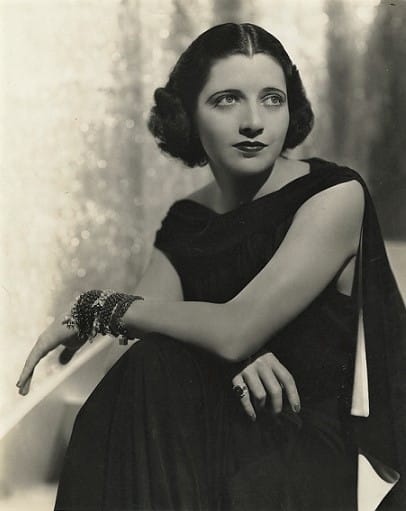
It was a gay light comedy, and Kay Francis wore long-sleeved white silk shirts with big cuff links. Her bedroom was all satin and flowers in vases, and her maid, who was Black, went around saying “Lawsy missy” all the time. There was a Negro chauffeur too, who rolled his eyes and scratched his head, and I wondered how on earth an idiot like that could be trusted with her beautiful cars. The whitefolks downstairs laughed every few minutes, throwing the discarded snicker up to the Negroes in the buzzards' roost. The sound would jag around in our air for an indecisive second before the balcony's occupants accepted it and sent their own guffaws to riot with it against the walls of the theater. I laughed, too, but not at the hateful jokes made on my people. I laughed because, except that she was white, the big movie star looked just like my mother. Except that she lived in a big mansion with a thousand servants, she lived just like my mother. And it was funny to think of the whitefolks' not knowing that the woman they were adoring could be my mother's twin, except that she was white and my mother was prettier. Much prettier.
Bailey and I lay the coins on top of the cash register. Uncle Willie didn't allow us to ring up sales during a fight. It was too noisy and might shake up the atmosphere. When the gong rang for the next round we pushed through the near-sacred quiet to the herd of children outside. “He's got Louis against the ropes and now it's a left to the body and a right to the ribs. Another right to the body it looks like it was low … Yes, ladies and gentlemen, the referee is signaling but the contender keeps raining the blows on Louis. It's another to the body, and it looks like Louis is going down.” My race groaned. It was our people falling. It was another lynching, yet another Black man hanging on a tree. One more woman ambushed and raped. A Black boy whipped and maimed. It was hounds on the trail of a man running through slimy swamps. It was a white woman slapping her maid for being forgetful. The men in the Store stood away from the walls and at attention. Women greedily clutched the babes on their laps while on the porch the shufflings and smiles, flirtings and pinching of a few minutes before were gone. This might be the end of the world. If Joe lost we were back in slavery and beyond help. It would all be true, the accusations that we were lower types of human beings. Only a little higher than the apes. True that we were stupid and ugly and lazy and dirty and, unlucky and worst of all, that God Himself hated us and ordained us to be hewers of wood and drawers of water, forever and ever, world without end. We didn't breathe. We didn't hope. We waited. “He's off the ropes, ladies and gentlemen. He's moving toward the center of the ring.” There was no time to be relieved. The worst might still happen. “And now it looks like Joe is mad. He's caught Carnera with a left hook to the head and a right to the head. It's a left jab to the body and another left to the head. There's a left cross and a right to the head. The contender's right eye is bleeding and he can't seem to keep his block up. Louis is penetrating every block. The referee is moving in, but Louis sends a left to the body and it's the uppercut to the chin and the contender is dropping. He's on the canvas, ladies and gentlemen.” Babies slid to the floor as women stood up and men leaned toward the radio. “Here's the referee. He's counting. One, two, three, four, five, six, seven … Is the contender trying to get up again?” All the men in the store shouted, “NO.” “—eight, nine, ten.” There were a few sounds from the audience, but they seemed to be holding themselves in against tremendous pressure. “The fight is all over, ladies and gentlemen. Let's get the microphone over to the referee … Here he is. He's got the Brown Bomber's hand, he's holding it up … Here he is …” Then the voice, husky and familiar, came to wash over us—“ The winnah, and still heavyweight champeen of the world … Joe Louis.” Champion of the world. A Black boy. Some Black mother's son. He was the strongest man in the world. People drank Coca-Colas like ambrosia and ate candy bars like Christmas. Some of the men went behind the Store and poured white lightning in their soft-drink bottles, and a few of the bigger boys followed them. Those who were not chased away came back blowing their breath in front of themselves like proud smokers. It would take an hour or more before the people would leave the Store and head for home. Those who lived too far had made arrangements to stay in town. It wouldn't do for a Black man and his family to be caught on a lonely country road on a night when Joe Louis had proved that we were the strongest people in the world.
Have you ever heard of a proxy battle? Where representation of one takes on the collection of the dreams of the entirety? One of the reasons I'm so passionate about personal library science and coding is not necessarily because I think that representation (blacks on TV, etc) is all that it's cracked up to be, personally, but because I think it's important to show the people of the world that we can have Joe Louis's but we can also do it because it's fun to do it for the sake of the thing too.