Swotes from 01.29.26
-
"Size is a natural result of growth, but growth itself cannot be commandeered; it can only be nurtured and encouraged [...]. Growth occurs; it is not made. [...] In any given environment, the growing organism develops at its own rate."
— Ursula Franklin, The Real World of Technology
"There are futures markets [...] This means that one can buy or sell shares of crops that have not yet been grown [...] such trading activities are not mere figments of the imagination; they are not totally removed from reality just because the crops have not yet grown, because the results of those trading activities are real. People make money or lose money in futures trading; rent is paid from transactions made on dealings that are essentially hypothetical. [...] The future is thus perceived and handled as a structural and technical extension of the present."
— Ursula Franklin, The Real World of Technology
"The sidewalks were paved with wood planks with green and black goo oozing out of the cracks. [...] By the time of the World’s Fair in 1893, six hundred people were killed in the city each year by passing freight cars, and many more were injured or lost limbs."
— Max Podemski, A Paradise of Small Houses
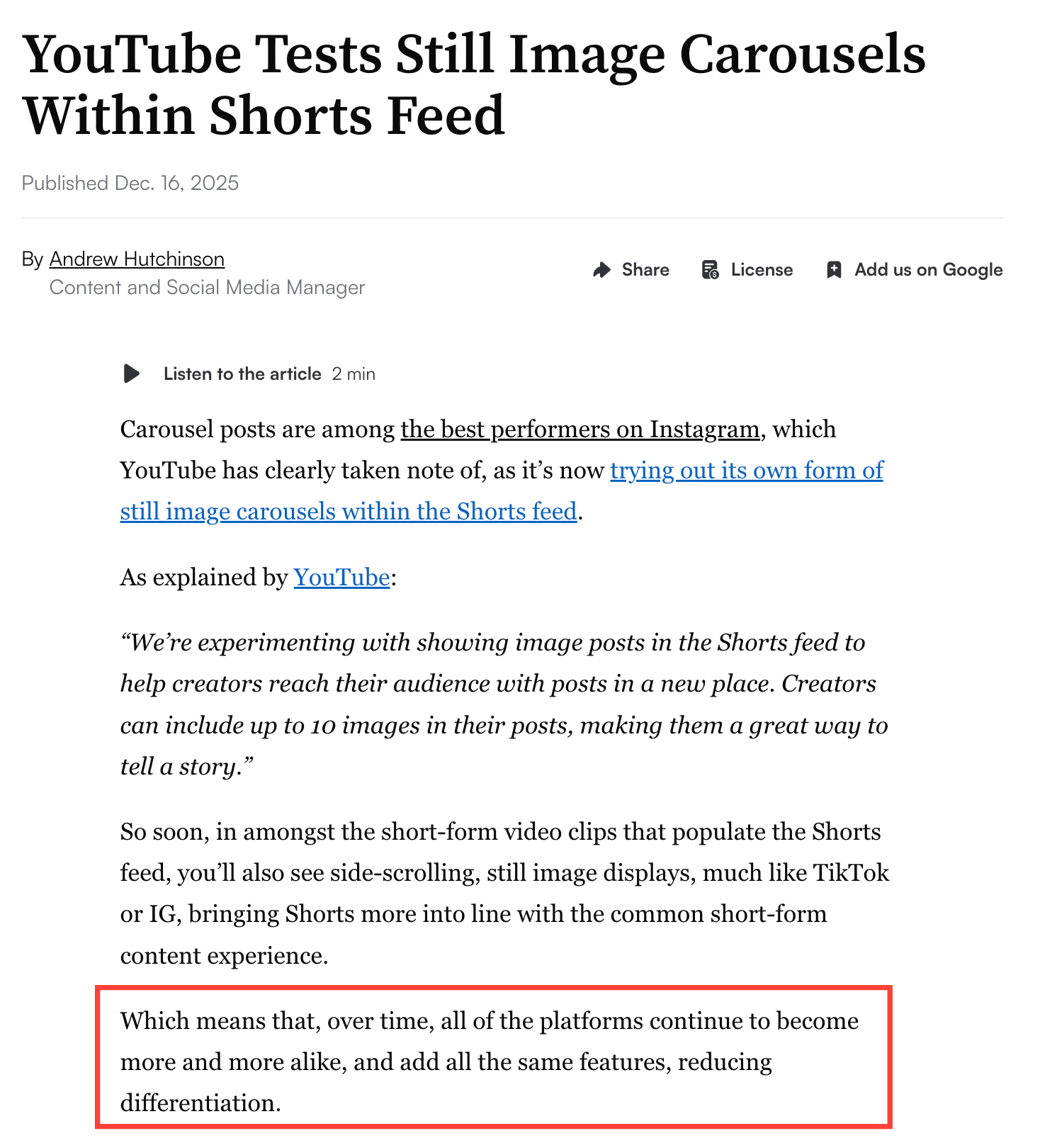
"[...] the Draft Riots of 1863 were a breaking point. The Irish inhabitants of Five Points and other nearby slums wreaked havoc for several days in one of the most violent episodes of civil unrest in US history. Angered by their conscription into the Civil War, they murdered Black residents in the streets and lit African American orphanages on fire [...] In the aftermath of the riots, a series of laws were passed in the city requiring [...] that at least one toilet be provided for every twenty residents. However, New York’s bureaucratic structure was weak and extremely corrupt [...] any reforms largely illusory. [...] that same year found that only 30 percent of tenements had any toilets at all."
— Max Podemski, A Paradise of Small Houses

"It’s one thing to say, “Smoking causes cancer,” but another to say that my uncle Joe, who smoked a pack a day for thirty years, would have been alive had he not smoked. [...] none of the people who, like Uncle Joe, smoked for thirty years and died can ever be observed in the alternate world where they did not smoke for thirty years."
— Judea Pearl, Dana Mackenzie, The Book of Why
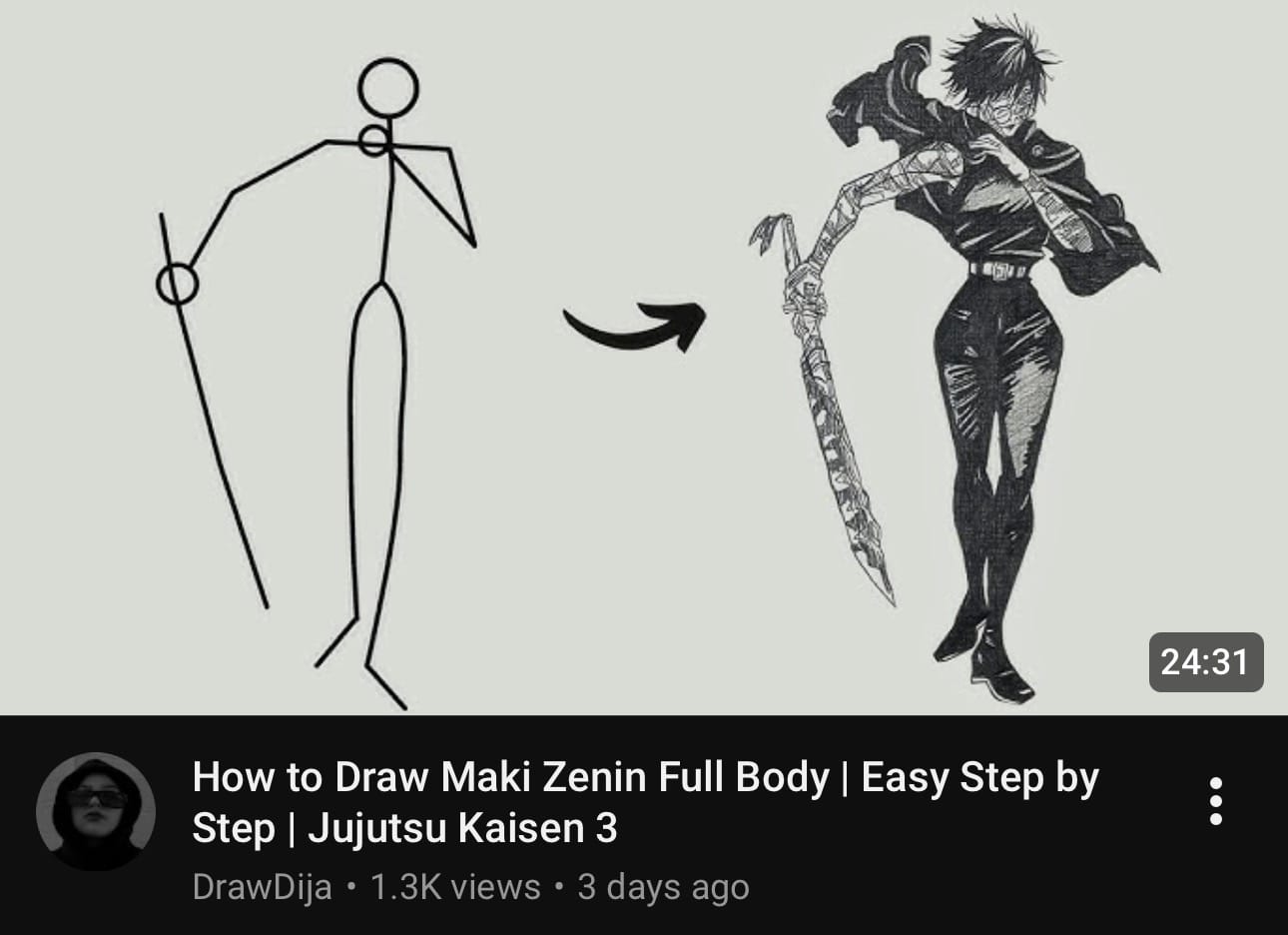
"The textbook description of the scientific method goes something like this: (1) formulate a hypothesis, (2) deduce a testable consequence of the hypothesis, (3) perform an experiment and collect evidence, and (4) update your belief in the hypothesis. [...] All evidence comes with a certain amount of uncertainty. Bayes’s rule tells us how to perform step (4) in the real world."
— Judea Pearl, Dana Mackenzie, The Book of Why

"Schedule two hours each day [...] to work on your top goal only."
— Matt Mochary, Alex MacCaw, and Misha Talavera, The Great CEO Within

"It may turn out that becoming a free person, while in principle possible, is so very difficult [...] that it is practically beyond the reach of most people. The passions are extremely powerful, and they tend to govern much of our ordinary lives. Even the person in whom [...] reason are of maximum affective potency [...] will eventually succumb to the influence of passive affects. Spinoza notes that “there is no singular thing in nature than which there is not another more powerful and stronger.” [...] Not even the free person, then, is immortal. He may enjoy a long and happy existence, one lived fruitfully under the guidance of reason [...] but eventually some passive affects—[...] disease, decay, and other infirmities brought about by the forces of nature—will get the better of him as well. [...] “All things excellent are as difficult as they are rare.” [...] Perhaps the best most people can realistically hope for is to become more and more free, to persevere as long as possible under reason’s tutelage [...]"
— Steven Nadler, Think Least of Death
"The absence of hate toward other human beings frees up a good deal of psychic space [...] several of the other cardinal sins are [...] simply different expressions of hate. Thus, without hate, there cannot be anger. Nor can there be vengeance, indignation, or envy."
— Steven Nadler, Think Least of Death

"After focus, the next most important thing for a novelist is, hands down, endurance. If you concentrate on writing three or four hours a day and feel tired after a week of this, you’re not going to be able to write a long work. What’s needed for a writer of fiction—at least one who hopes to write a novel—is the energy to focus every day for half a year, or a year, two years. You can compare it to breathing. If concentration is the process of just holding your breath, endurance is the art of slowly, quietly breathing at the same time you’re storing air in your lungs. [...] Continuing to breathe while you hold your breath. [...] You’ll naturally learn both concentration and endurance when you sit down every day at your desk and train yourself to focus on one point. [...] gradually you’ll expand the limits of what you’re able to do. [...] This involves the same process as jogging every day to strengthen your muscles and develop a runner’s physique. Add a stimulus and keep it up. And repeat. Patience is a must in this process, but I guarantee the results will come."
— Haruki Murakami and Philip Gabriel, What I Talk About When I Talk About Running

"Lightning is a lot of electrons moving very quickly from one spot to another."
— Charles Petzold, Code

"In Syria, she consumed a bowl full of sheep’s eyeballs, which she reported tasted exactly like one would imagine sheep’s eyeballs to taste."
— Pat Conroy, The Prince of Tides
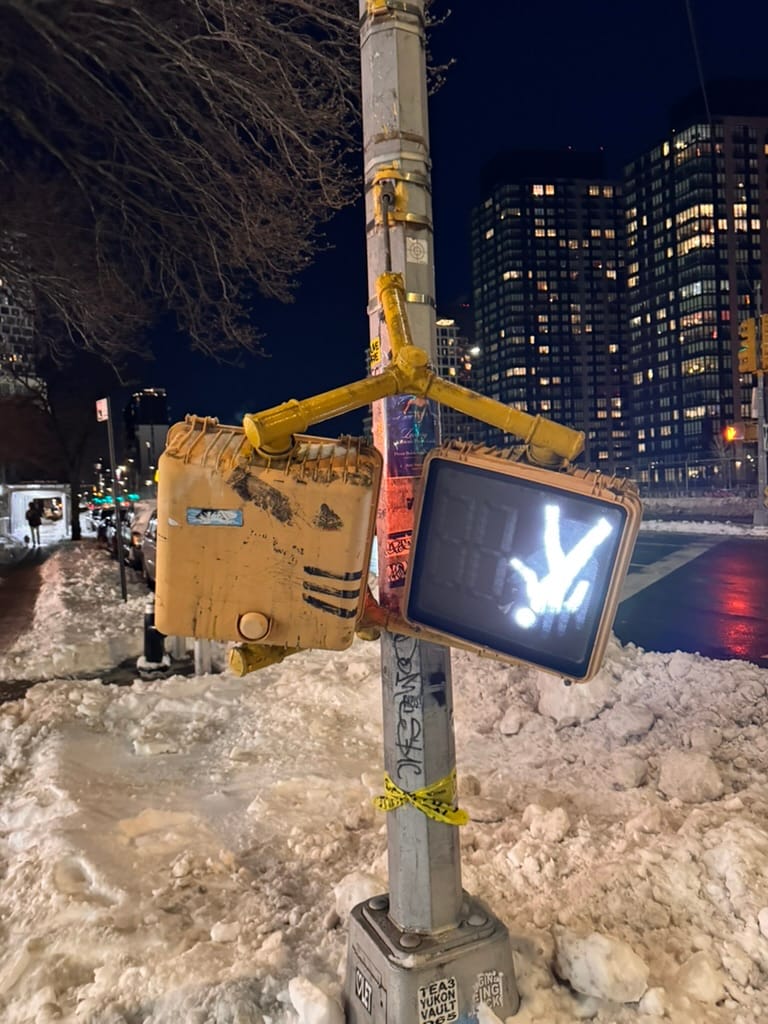
"One can not pursue happiness; if he does he obscures it. If he will proceed with the human task of life, the relocation of the center of gravity of the personality to something greater outside itself, happiness will be the outcome."
— Robert A. Johnson, He
"The life promised by these images is [...] uncomplicated. It is a life of coffees taken out on the east-facing balcony in the spring and summer while scrolling New York Times headlines and social media on a tablet. The plants are watered as part of a daily routine that also includes yoga and a breakfast featuring an assortment of seeds. There is work to be done at a laptop, of course, but at a pace more befitting an artist than an office worker: between intense bursts of concentration at a desk there might be a walk, a videocall with a friend who has an idea for a new project, some jokes exchanged on social media, a quick trip to the nearby farmers’ market. [...] work is a source of growth and creative stimulation, the bassline to the tune of leisure. [...] Beauty and pleasure seem as inextricable from daily life as particles suspended in a liquid. And it is a happy life, or so it seems from the pictures in the post advertising the apartment for short-term rental at one hundred and eighteen euros a day, plus the fee to cover the Ukrainian cleaner, paid through a French gig economy company that files its taxes in Ireland [...]"
— Vincenzo Latronico and Sophie Hughes, Perfection
"An obsession with real estate—imported by the New Yorkers, together with the bedbugs [...]. Everyone was looking for a better apartment [...] All this would have seemed utterly irrelevant just a few years earlier, when the choice for renters was between vast apartments for six hundred euros a month and tiny ones for two-twenty. The injection of dollars, which could buy more meters in Berlin than feet in San Francisco, only fueled the chaos in the city’s housing market. Every week, Anna and Tom would receive at least two emails asking if they knew of anyone leaving an apartment, or if they had any leads. The senders were almost always strangers, and from the email subject lines it was clear the request had been forwarded in a chain going back weeks."
— Vincenzo Latronico and Sophie Hughes, Perfection

"Man is sometimes extraordinarily, passionately, in love with suffering, and that is a fact. There is no need to appeal to universal history to prove that; only ask yourself, if you are a man and have lived at all. As far as my personal opinion is concerned, to care only for well-being seems to me positively ill-bred. Whether it’s good or bad, it is sometimes very pleasant, too, to smash things."
— Fyodor Dostoevsky, Notes From Underground

"[...] I always moved aside, while he did not even notice my making way for him. And lo and behold a bright idea dawned upon me! “What,” I thought, “if I meet him and don’t move on one side? What if I don’t move aside on purpose, even if I knock up against him? [...]” This audacious idea took such a hold on me that it gave me no peace. I was dreaming of it continually, horribly, and I purposely went more frequently to the Nevsky in order to picture more vividly how I should do it [...] “Of course I shall not really push him,” I thought, already more good-natured in my joy. “I will simply not turn aside, will run up against him, not very violently, but just shouldering each other—just as much as decency permits. I will push against him just as much as he pushes against me.” [...] my preparations took a great deal of time. To begin with, when I carried out my plan I should need to be looking rather more decent, and so I had to think of my get-up. “In case of emergency, if, for instance, there were any sort of public scandal [...] I must be well dressed; that inspires respect and of itself puts us on an equal footing in the eyes of the society.”"
— Fyodor Dostoevsky, Notes From Underground