The How and Why of Entity Shorthand
For those with a commonplace

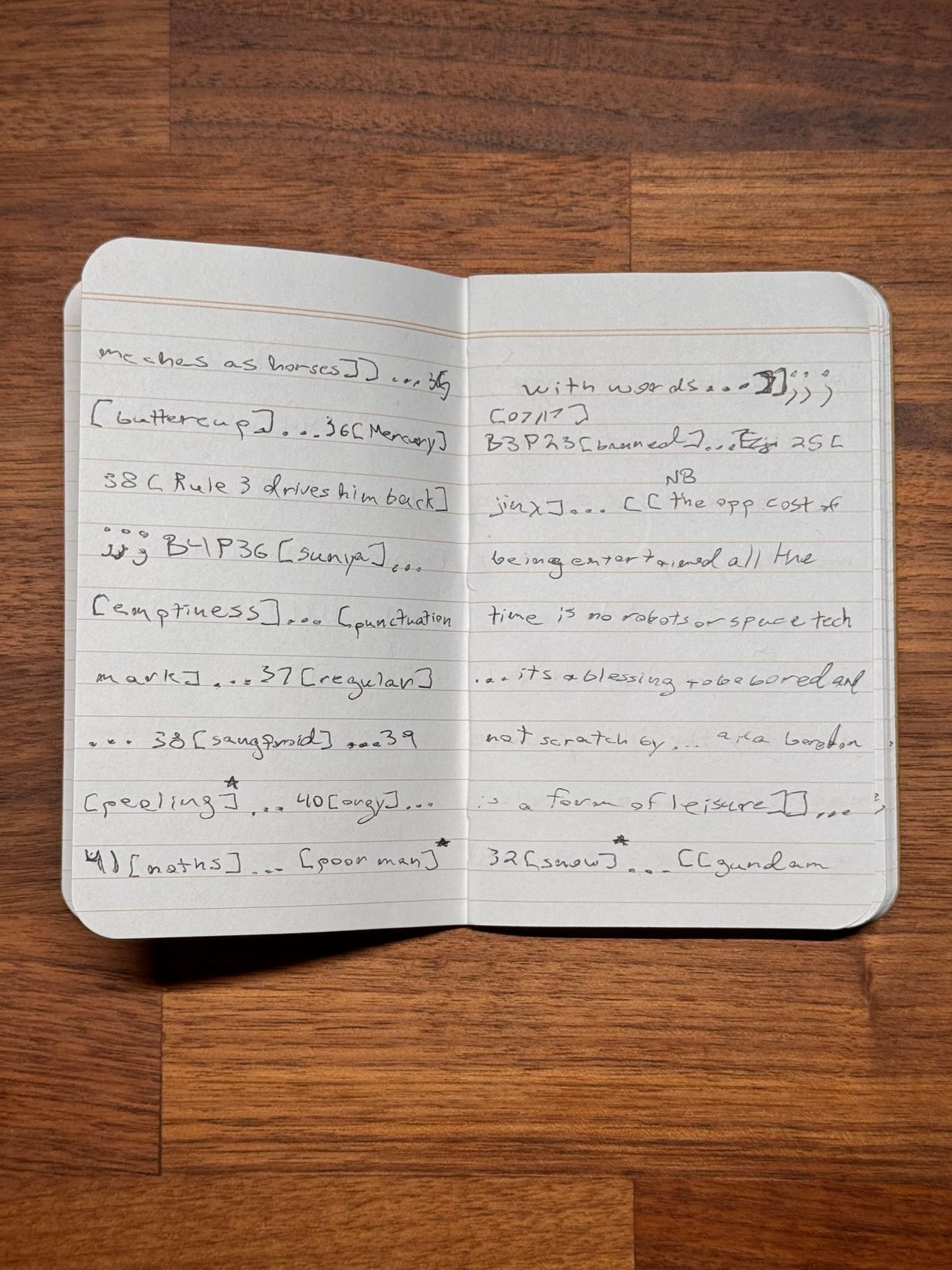
If you are building a commonplace book, you must learn how to create an ontology that works across books.
Unfortunately, developing this ontology is anything but trivial. We must be able to store ideas (entries) and find them later to use them in our essays or conversations.
Even worse, storing entries and looking up entries have inverse cost functions, i.e. the more time you take to store something, the easier it is to find later. The less time you take to store an entry, the harder it is to find later.
If you throw your clothes in a pile in the middle of the floor versus taking the time to hang them properly...
Entity shorthand is useful because it is fast to store and fast to look up.
/*
ToC (Page 1):
B1 = Book Title 1, Author
B2 = Book Title 2, Author
...

Reading Session Notations (Page 2-N): B#P#[key], [[marginalia]], ..., ;;;, *, (date)
*/

// real life example for I, Robot (B3) by Isaac Asimov and Why Does the World Exist by Jim Holt (B4)

// I, Robot (B3) by Isaac Asimov
(07/17/2026)
B3P23[banned] ... 25[jinx] ... [[the cost of being entertained by screens is those who would spend their time doing science]] ... 32[snow]* ... [[gundam mechs to asimov are horses]] ... 35[buttercup] ... 36[mercury] ... 38[rule 3 drives him back] ;;;

// Why Does the World Exist by Jim Holt (B4)
B4P36[sunya] ... [emptiness] ... [punctuation mark] ... 37[regular] ... 38[sangfroid] ... 39[peeling]* ... 40[orgy] ... 41[noths] ... [poor man]* ...
Here's what's happening:
- In cases like
B4P36[sunya] ... [emptiness] ... [punctuation mark]I don't add the page # to "emptiness" or "punctuation mark" because they are on the same page 32[snow]*the * means I really liked this passage, and that it's worth a deeper look during review...means continue in the same source,;;;means stop and switch[[...]]means I had a thought between pages, i.e.25[jinx] ... [[the cost of being entertained by screens is those who would spend their time doing science]] ... 32[snow]*means "the cost of..." happened in my mind somewhere between page 25 and page 32
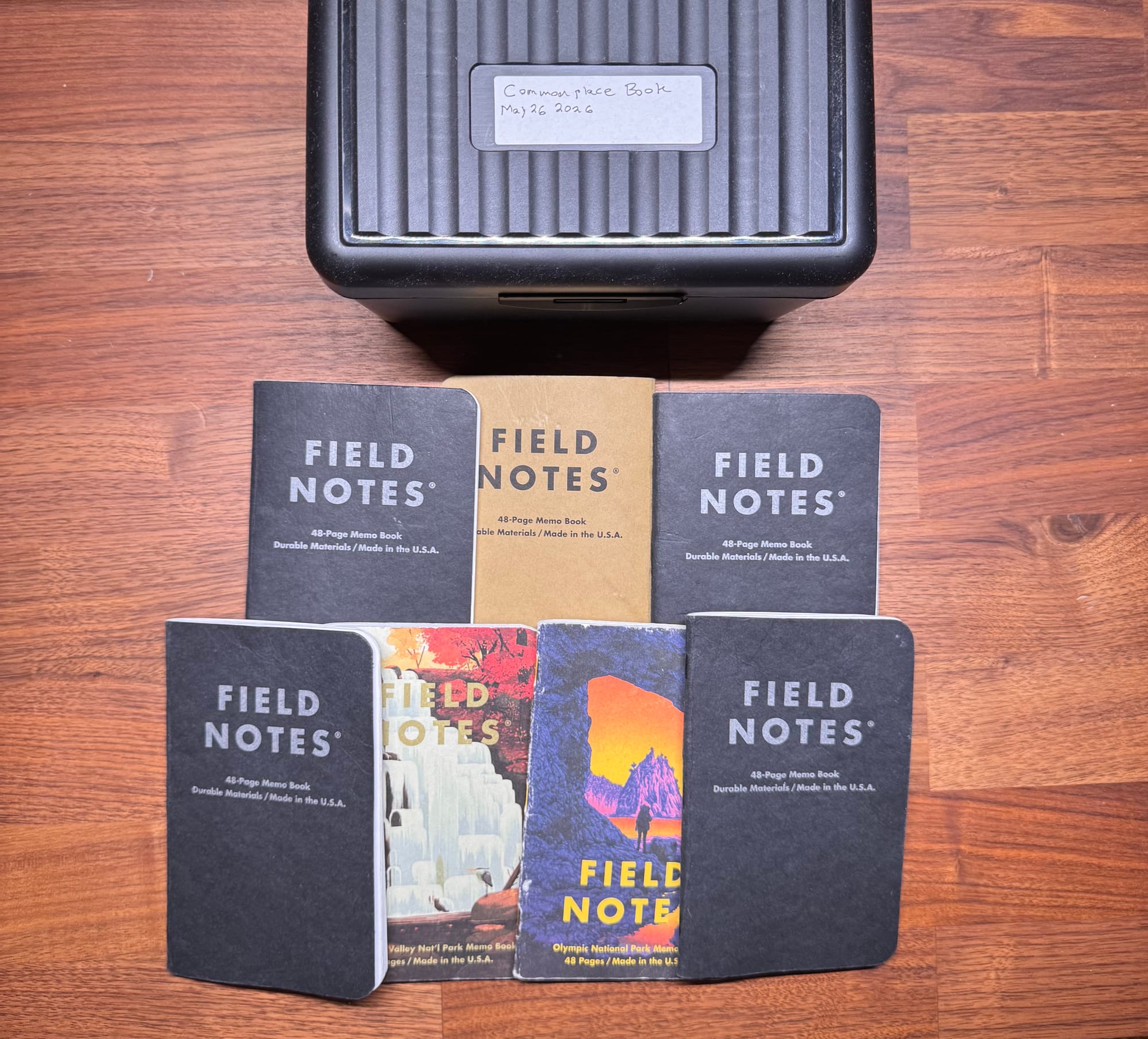
This is what it really looks like in my Field Notes Journal (I have the left handed version, but I put the pictures in order for you righties 😈)
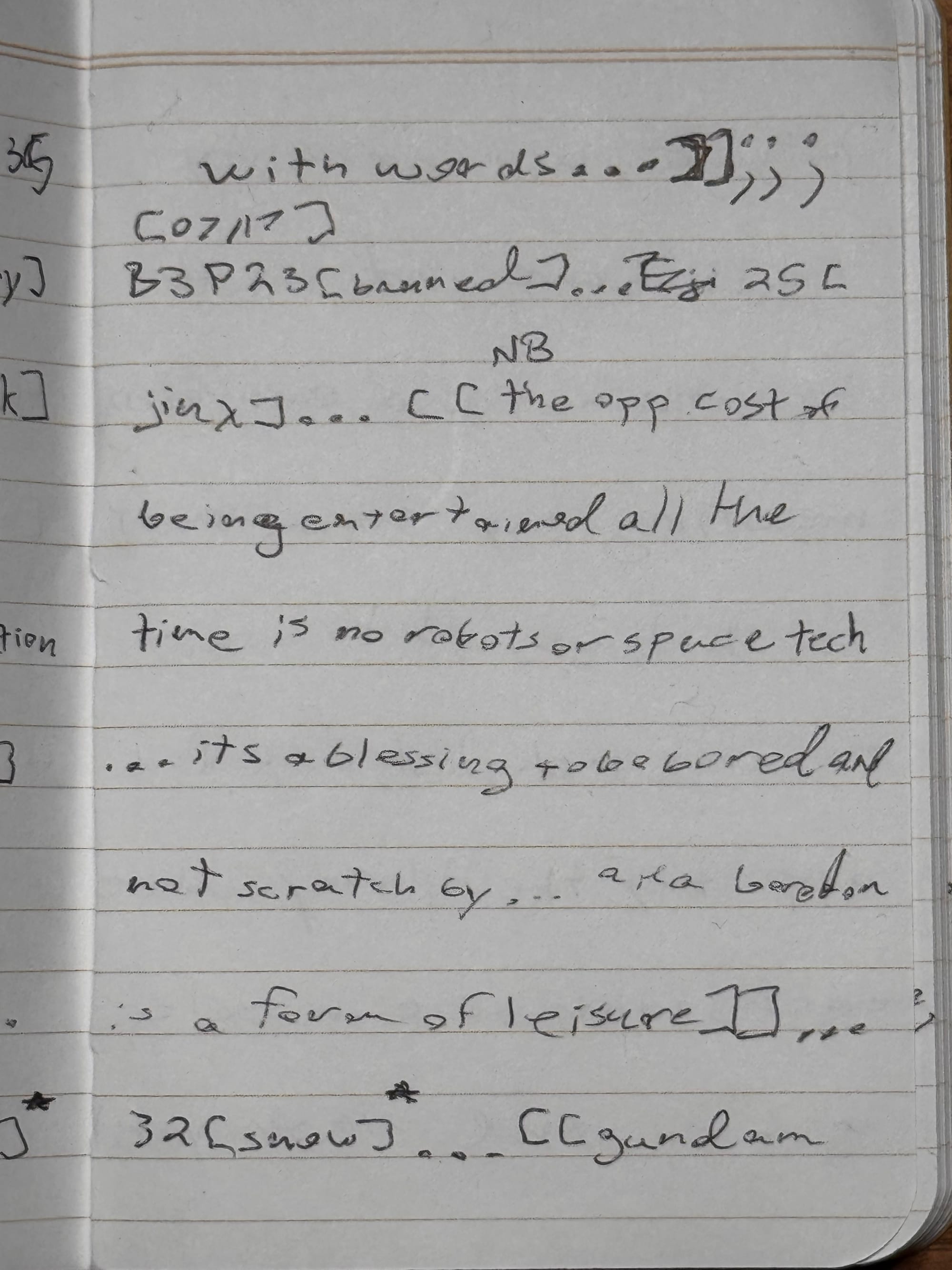
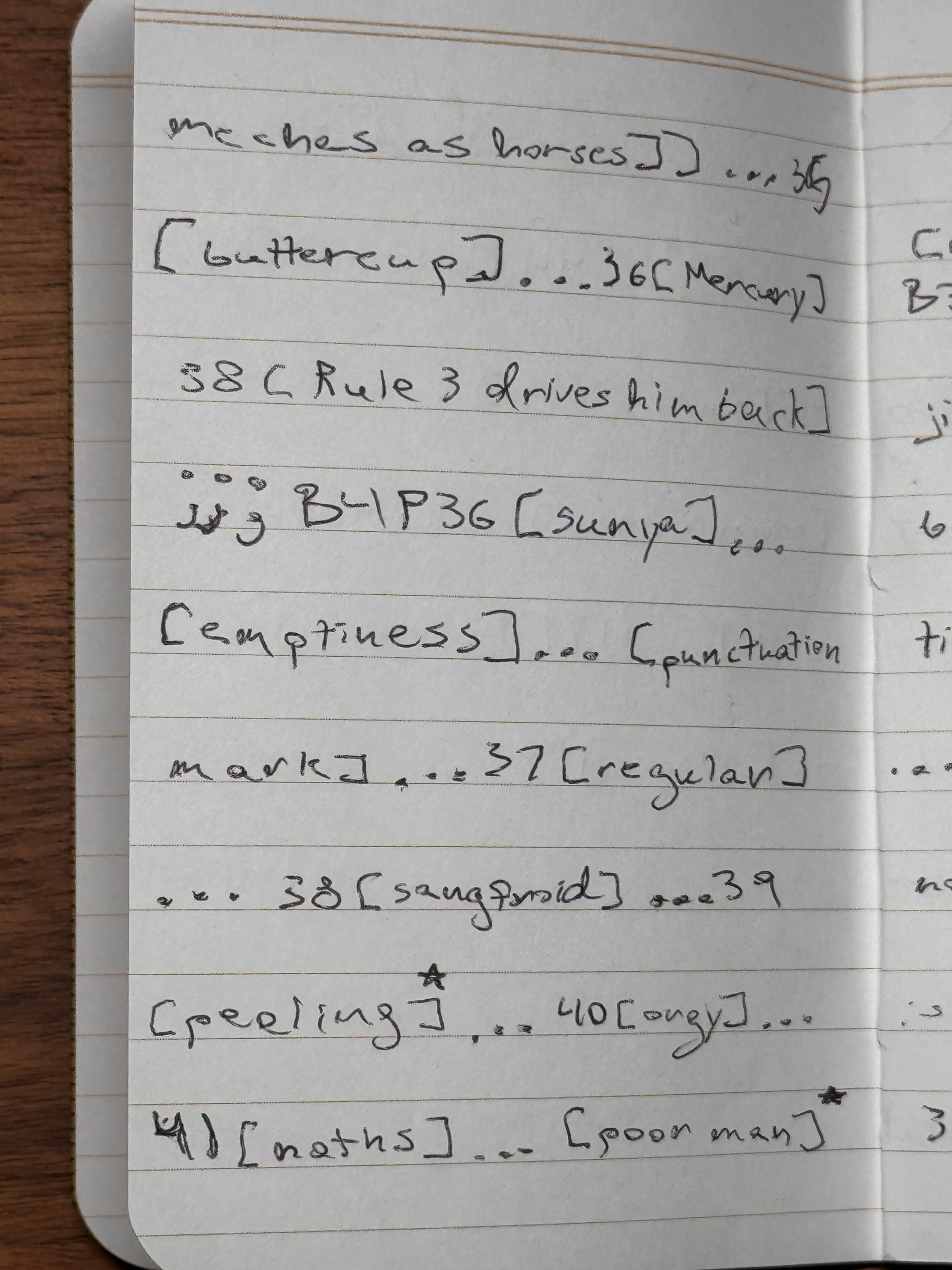
notice how 15 pages of I, Robot and 5 pages of Why Does the World Exist fit in two pages of a tiny journal!!!
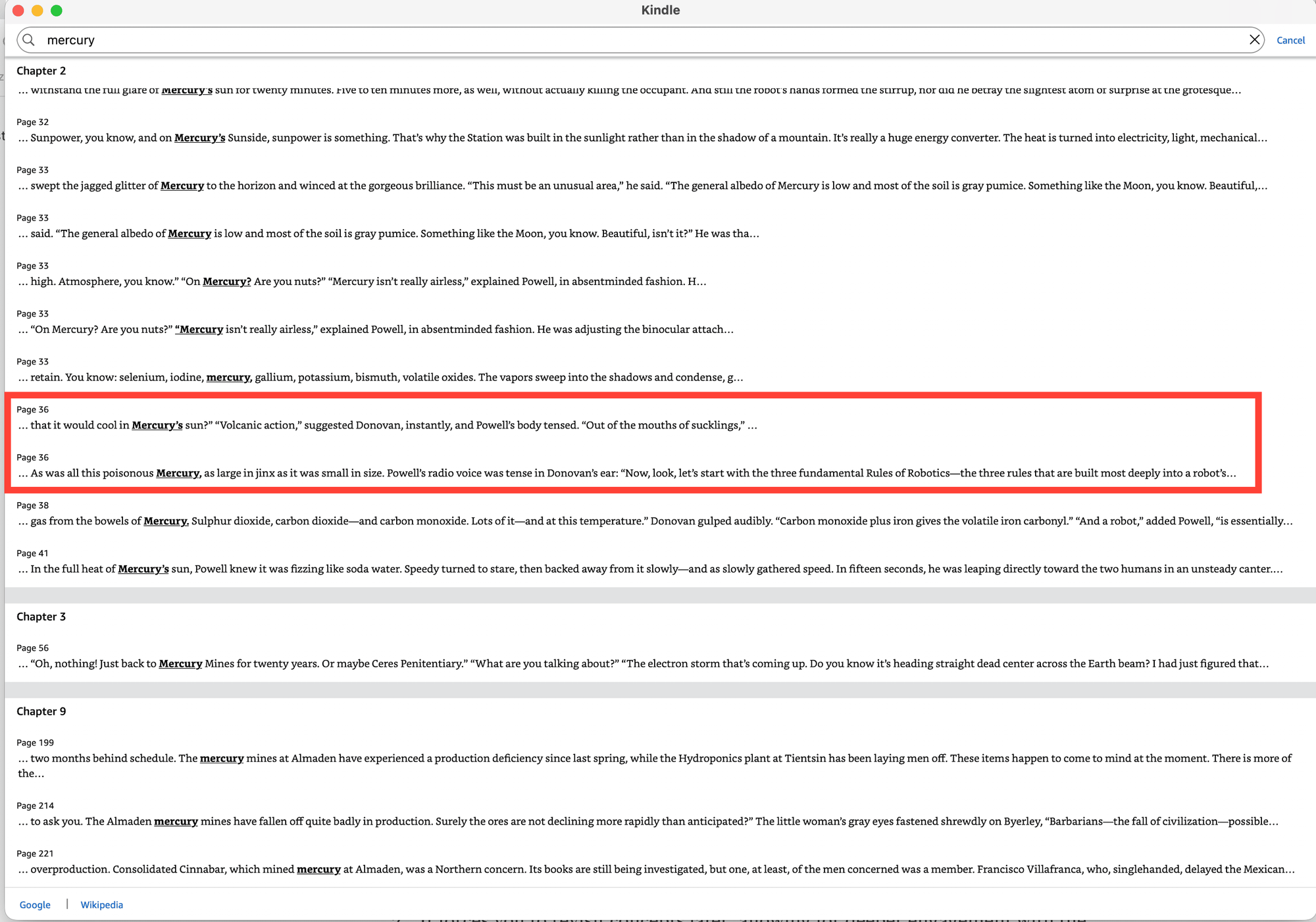
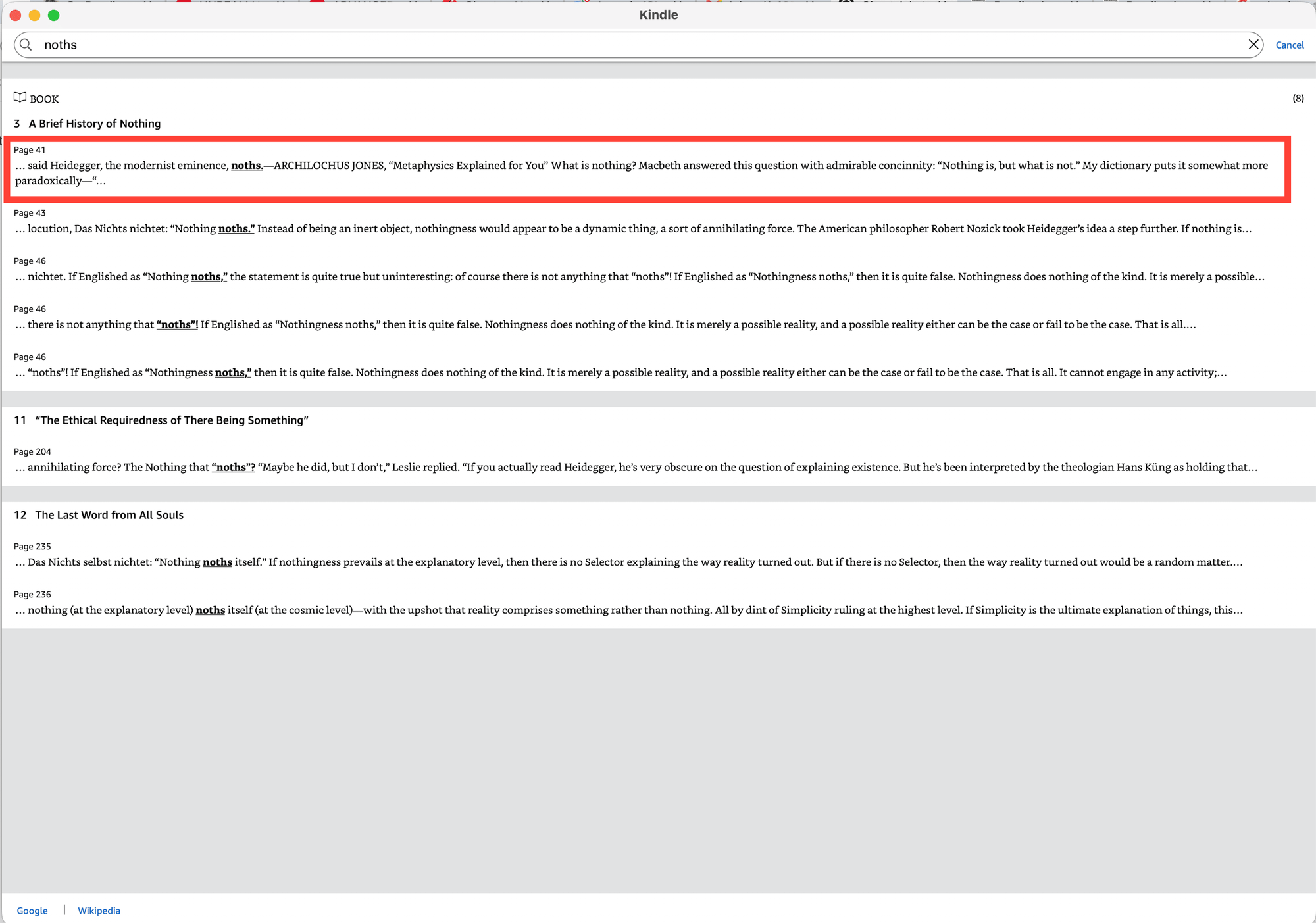
When I look something up later (Ctrl +F), I get:
There are other benefits to Entity Shorthand.
- You get to see a overview log of how many pages you read in any given session, functionally creating a free reading tracker
- It is a compact form, meaning you can fit entire books into a small journal like a Field Notes
- It forces you to revisit concepts later, allowing for deeper engagement with the source material
- "..." is easily converted to ";;;" meaning you can pause/restart/stop sessions easily, especially if you Parallel Read
- It's so easy to do when lazy, but makes reading active, which is integral to becoming well read
Other tips:
- Choose word(s) that are ~roughly in the middle of the section you resonate with
- When you revisit your key, go back ~three paragraphs and start there
- Choose word(s) that are uncommon, but easy to spell
Check out all the strategies I've developed to make you a better reader here: