The Miyuki-dōri
Instead of dutifully studying at home, they loitered all day in front of shops, chatted up members of the opposite sex, and squandered their fathers’ hard-earned money
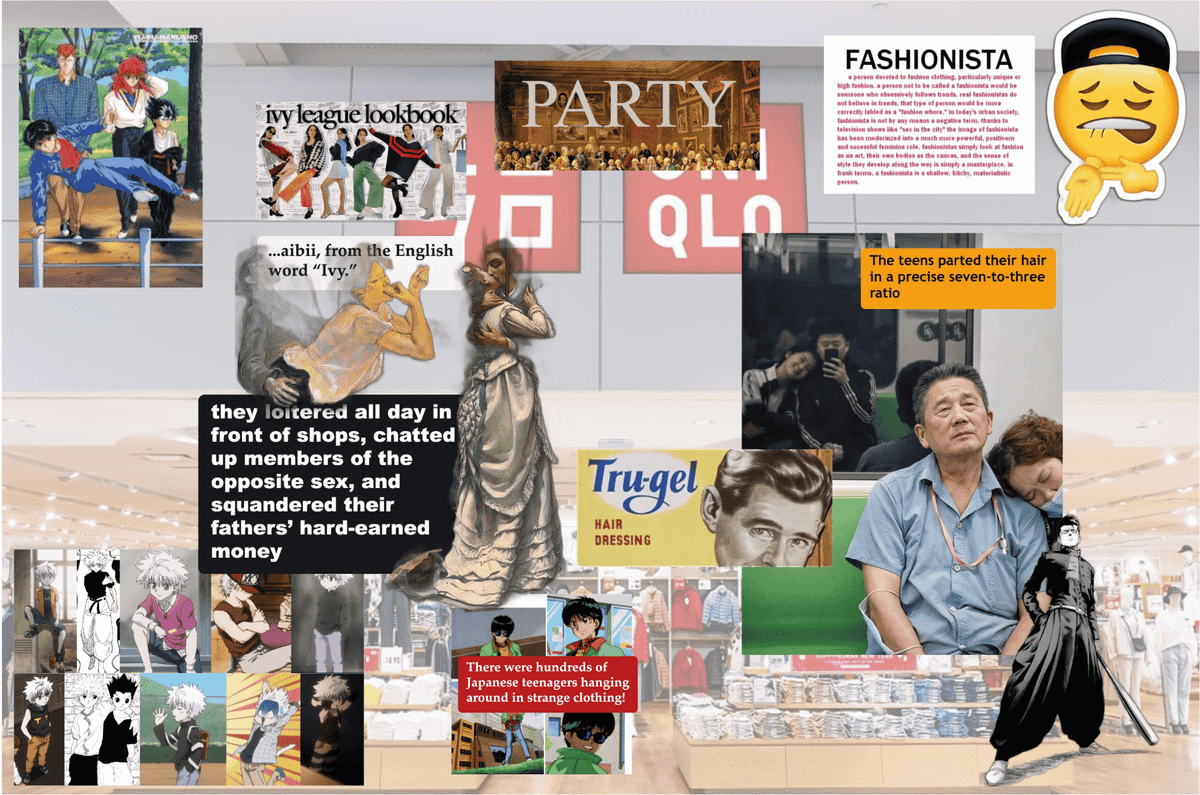
These cleanup efforts proceeded steadily until August, when the switchboards at Tsukiji Police Station began lighting up with frantic phone calls. Ginza shop owners reported an infestation on the main promenade, Miyuki-dōri, requiring immediate assistance from law enforcement: There were hundreds of Japanese teenagers hanging around in strange clothing! Police sent reconnaissance teams to the scene, where they discovered young men wearing shirts made from thick wrinkled cloth with unusual buttons holding down the collar, suit jackets with a superfluous third button high up on the chest, loud madras and tartan plaids, shrunken chino pants or shorts with odd straps on the back, long black knee-high socks, and leather shoes with intricate broguing. The teens parted their hair in a precise seven-to-three ratio—a look requiring the use of electric hair dryers. Police soon learned that this style was called aibii, from the English word “Ivy.” Throughout the summer, tabloid magazines editorialized against these wayward teens in Ginza, dubbing them the Miyuki Tribe (miyuki-zoku). Instead of dutifully studying at home, they loitered all day in front of shops, chatted up members of the opposite sex, and squandered their fathers’ hard-earned money at Ginza’s menswear shops. Their pitiful parents likely had no idea about their tribal identities: the teens would sneak out of their houses dressed in proper school uniforms and then slip inside café bathrooms to change into the forbidden ensembles. The press began to call Miyuki-dōri, a street name that honored the Emperor’s departure from his palace, Oyafukō-dōri—“street of unfilial children.”


